Beyond the Basic Momo: Fillings, Folds, and Every Way to Cook Them
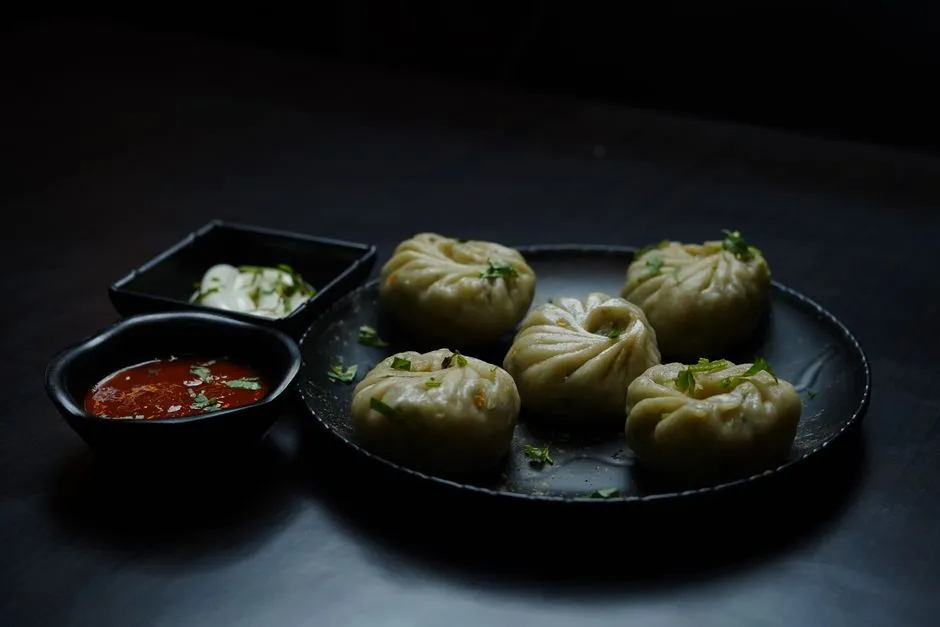
How to Make Momos: The Whole Method
To make momos, knead a stiff flour-and-water dough, rest it, prepare a moist but not watery filling, roll thin wrappers, fill and seal them, then steam over already-boiling water. For 30 momos, use 250 g flour with 125–140 ml water, divide the dough into 12–13 g pieces, and portion about 15 g filling into each wrapper. Meat fillings must be checked with a thermometer, not judged by the wrapper.
That method leaves plenty of room for choice. Chicken, pork, lamb, vegetables, and paneer all work. A half-moon fold is easiest to learn; a round pleated pouch is compact and traditional-looking. Steaming is the baseline, while pan-browning, frying, and jhol change the finish or the way the cooked dumplings are served.
What Counts as a Momo?
A momo is a filled dumpling associated with Nepal and the wider Himalayan region. It is a family of preparations, not one mandatory filling or fold. The Nepal Tourism Board's Nepali Heritage Cuisine recipe book gives an all-purpose-flour dough with minced meat, onion, ginger-garlic paste, oil, cumin, and garam masala. It also names chicken, mutton, buff, paneer, cheese, and vegetables as possible fillings, and notes steamed, fried, and jhol versions.
That is useful permission for a home cook: learn the wrapper and sealing method once, then change the center. If this is your first batch, our Nepali momo recipe gives one complete chicken formula from dough to achar. This guide is the decision map for what to change next.
The Base Dough for 30 Momos
Use this wrapper formula across the fillings below:
| Ingredient | Amount |
|---|---|
| All-purpose flour | 250 g |
| Water | 125–140 ml |
| Fine salt | 1/2 teaspoon |
Mix the flour and salt, then add 125 ml water. Knead until no dry flour remains. Add the remaining water a teaspoon at a time only if the dough will not come together. It should feel firm, smooth, and less soft than bread dough.
Knead for 8–10 minutes, cover, and rest for 30 minutes. The rest lets the flour hydrate and the gluten relax, which makes the dough easier to roll without making it floppy. Divide it into 30 pieces of 12–13 g each. Keep every piece covered until it reaches the rolling pin; exposed dough forms a dry skin that will not seal cleanly.
Roll each piece into a circle about 10 cm across. Leave the center slightly thicker than the edge. The middle must carry the filling; the edge must be thin enough to pleat without becoming a heavy rope.
How to Choose a Momo Filling
Aim for roughly 450 g of finished filling for 30 wrappers, portioned at about 15 g each. More filling is not more generous if the seam cannot close. Whatever goes inside should be cold, finely cut, well seasoned, and cohesive enough to sit on a spoon without releasing a puddle.
| Filling | What makes it work | Main mistake to avoid |
|---|---|---|
| Chicken | Ground thigh, finely minced onion, ginger, garlic, cumin, salt, and a little oil | Very lean meat with no added fat becomes dry |
| Pork or lamb | Ground meat, onion or spring onion, ginger, garlic, cumin, and restrained seasoning | Large onion pieces break the seal |
| Vegetable | Finely chopped cabbage and carrot, with cooked and cooled mushroom if wanted | Unsqueezed vegetables leak water into the wrapper |
| Paneer | Crumbled paneer with chopped cabbage, spring onion, ginger, cumin, and enough oil to bind | A dry, crumbly mix falls out while pleating |
Chicken and other meat fillings
For the established chicken batch, combine 300 g ground chicken with about 100 g finely minced onion, ginger, garlic, cumin, salt, and 1 tablespoon oil or melted butter. Thigh meat stays juicier than breast. Mix until the filling feels lightly tacky rather than loose.
Pork and lamb can use the same 300 g meat starting point. Their fat content varies, so judge before adding oil: the filling should hold together but not leave liquid in the bowl. If you want to check seasoning, cook a teaspoon of filling completely in a clean pan and taste that. Never taste raw filling.
Keep meat filling refrigerated while the dough rests and while you roll. Work with one small bowl at the table and return for more as needed. Wash hands, knives, boards, and bowls that touched raw meat before using them for cooked momos or achar. FoodSafety.gov's four food-safety steps are clean, separate, cook, and chill; dumpling assembly needs all four because raw filling and ready-to-eat sauce share a small workspace.
Vegetable filling that does not flood the wrapper
Finely shred cabbage and carrot, salt them lightly, let them stand for 10 minutes, then squeeze them firmly in a clean towel. The point is not to cook the vegetables with salt. It is to remove free water before that water turns to steam inside a sealed wrapper.
If using mushrooms, chop and cook them until their released liquid has evaporated, then cool them completely before mixing. Add spring onion, ginger, garlic, cumin, and enough oil to make the vegetables cling together. A hot or wet filling softens the wrapper before it reaches the steamer.
Paneer filling that stays tender
Crumble paneer finely and mix it with squeezed cabbage or another dry vegetable component. Add spring onion, ginger, cumin, salt, and a spoonful of oil. The filling should compress into a loose mound when pinched. If it crumbles like dry chalk, add oil a teaspoon at a time; if it weeps, add more squeezed vegetables rather than flour.
Two Momo Folds Worth Learning
Both folds begin with the same setup: put a wrapper on your palm, place about 15 g filling in the center, and leave a clean border. If filling touches the edge, wipe it away. Wet or oily dough will slide instead of bonding.
Half-moon pleat
- Fold the wrapper over the filling to make a semicircle.
- Pinch one end shut.
- Make a small pleat in the front edge and press it onto the flat back edge.
- Repeat toward the other end, keeping the filling below the seam.
- Pinch the entire rim once more, especially both corners.
This is the forgiving fold. One side stays flat, so the pleats only have to travel in one direction. If the last corner will not close, remove a little filling; stretching thin dough over an overfilled center creates a weak spot.
Round pleated pouch
- Hold the filled wrapper like a shallow cup.
- Pinch one small pleat between thumb and forefinger.
- Rotate the wrapper and add overlapping pleats around the rim.
- Keep the opening centered and the filling below your fingers.
- Gather the final opening and pinch it completely closed.
The finished momo should stand without splitting and should have no visible hole at the top. Perfectly even pleats are decorative. A complete seal is functional.
How to Steam Momos Properly
Bring the steamer water to a full boil before loading the tray. Grease the perforated surface lightly or use perforated parchment or cabbage leaves. Arrange momos in one layer with space between them; touching wrappers can fuse and tear when lifted.
Steam with the lid closed. The Nepal Tourism Board recipe gives 10–15 minutes as its momo steaming range. Treat that as a planning range, not proof of doneness. Wrapper thickness, filling temperature, dumpling size, steamer material, altitude, and how many tiers are loaded all change the time.
Check a center momo from the coolest-looking part of the tray. Insert a clean instant-read thermometer through the side and into the middle of the filling. According to FoodSafety.gov's safe minimum temperature chart, poultry must reach 165°F (74°C), while ground meats such as pork and lamb must reach 160°F (71°C). Check more than one momo when sizes vary. Color, clear juices, and a glossy wrapper are not substitutes for temperature.
For vegetable or paneer momos, the wrapper should look set rather than floury, and the center should be steaming hot. Lift cooked momos with a thin spatula instead of pulling their tops.
Steamed, Pan-Browned, Fried, and Jhol Momos
The filling and seal stay important across every finish. Cooking style changes the surface and serving experience, not the safe-temperature requirement.
| Style | Method | Result |
|---|---|---|
| Steamed | Cook in a covered steamer over boiling water | Soft, supple wrapper |
| Pan-browned | Steam fully, then brown the bottoms in a lightly oiled skillet | Crisp base, soft pleated top |
| Fried | Steam fully, dry the surface, then fry until crisp | Crisp wrapper all around |
| Jhol | Steam fully and serve in a hot, seasoned tomato or sesame broth | Soft momo with a spoonable sauce |
For a first pan-browned batch, cook the momos safely in the steamer, then transfer them to a thin film of hot oil. Brown only the base. This separates doneness from browning and makes it much easier to avoid a dark wrapper with raw meat inside.
For fried momos, let the steamed surface dry before it goes near oil. Water on food causes hot oil to spit. Use a stable, deep pan, keep the pan handle turned inward, lower food away from your body, and do not crowd the oil. Do not add wet, frozen, or visibly icy momos to hot oil.
Jhol momo is a serving format as much as a cooking style. Put fully cooked momos in a bowl and ladle over hot tomato-sesame or timmur-seasoned jhol. Do not rely on a brief soak in hot broth to cook a raw meat center.
What Went Wrong With This Batch?
| Problem | Likely cause | Next-batch fix |
|---|---|---|
| Filling leaks before steaming | Vegetables were wet or meat mixture was loose | Squeeze vegetables; keep filling cold; discard pooled liquid |
| Wrapper tears under the filling | Center was rolled too thin or filling was overportioned | Keep the center thicker and return to about 15 g filling |
| Seam opens in the steamer | Filling touched the rim or the edge dried out | Keep a clean border and cover dough between steps |
| Wrapper is thick and chewy | Dough pieces were too large or edges stayed thick | Weigh 12–13 g pieces and roll outward from the center |
| Bottoms stick and split | Tray was ungreased or momos sat too long after cooking | Grease or line the tray and lift promptly with a spatula |
| Meat center is below temperature | Steam was weak, tray crowded, or momos varied in size | Restore a full boil, leave space, and continue steaming until verified |
| Filling tastes bland | Seasoning was never tested | Cook and taste a teaspoon before assembly |
Do not solve an undercooked center by eating around it. Return the batch to the steamer and recheck the center with a cleaned thermometer.
A Calm Order for a Big Momo Batch
Momos become manageable when each job has a holding plan:
- Mix and rest the dough.
- Prepare the filling and refrigerate it.
- Set up the steamer and bring the water toward a boil.
- Divide every dough piece and keep them covered.
- Roll, fill, and fold only one small group at a time.
- Keep raw meat momos cold until their tray is ready.
- Steam, verify temperature, and move cooked momos to a clean platter.
- Refill the steamer water carefully between batches if needed.
If different fillings share a session, use separate bowls and utensils. Steam vegetable or paneer momos before raw-meat batches, or wash and sanitize equipment between them. Mark different folds so nobody has to cut open every momo to find the vegetarian tray.
Serve the finished dumplings with tomato achar, jhol, or a simple sharp sauce. Rice, lentils, and vegetable dishes can round out the meal, while the momos and dumplings collection keeps the techniques together.
The Bottom Line
Good momos depend on control rather than elaborate decoration: firm rested dough, filling without free water, a clean complete seal, already-boiling steamer water, and a thermometer for meat centers. Learn the half-moon first, keep each portion modest, and steam before experimenting with browning, frying, or jhol. Once those fundamentals hold, chicken, pork, lamb, vegetable, and paneer versions can all come from the same wrapper method.