Dal Bhat Recipe: How to Make Nepal's Everyday Lentil Meal
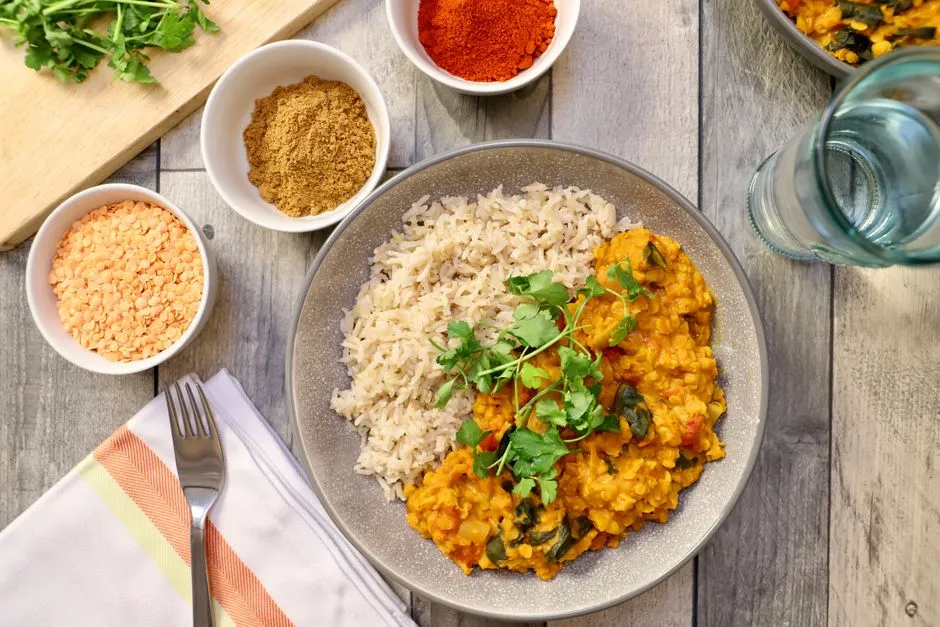
How to Make Dal Bhat at Home
Dal bhat is a complete Nepali meal built around dal, a loose lentil soup, and bhat, plain cooked rice. Tarkari (vegetable curry), saag (greens), and achar (pickle or relish) often complete the plate. For this four-person version, simmer 1 cup of red or split yellow lentils in 4 cups of water for 20–25 minutes, cook 2 cups of rice separately, and make a quick potato-cauliflower tarkari. Finish the dal with hot ghee, cumin, garlic, and optional jimbu. The whole meal takes about 45 minutes when the three pans run together.
The Nepal Tourism Board describes dal, bhat, and tarkari as a regular Nepali meal, often served with achar. The point is not one fixed restaurant-style plate. It is a dependable meal pattern that changes with the lentil, vegetable, season, and household.
What Is Dal Bhat?
Dal bhat literally means “lentils and rice.” A typical plate includes:
- Dal: thin, pourable lentil soup, gently seasoned
- Bhat: plain steamed rice, which anchors the plate
- Tarkari: a seasonal vegetable curry, here made with potato and cauliflower
- Saag: quickly cooked leafy greens, when available
- Achar: a sharp pickle or fresh relish that lifts the softer flavors
That variation is part of the tradition. The Nepal Tourism Board’s Nepali Heritage Cook Book notes that dal bhat may use black, red, yellow, green, or mixed lentils, while the vegetables depend on geography, climate, season, and family preference. The same book gives a dal finished with ghee, asafoetida, cumin, and garlic, alongside rice and potato-cauliflower tarkari.
Dal bhat is everyday food rather than a single ceremonial recipe. Peace Corps guidance for volunteers in Nepal calls it the country’s daily staple and notes that each household’s version differs; it also describes eating it twice a day as a common norm. That context explains why a practical dal bhat recipe should be flexible without becoming vague.
Trekkers may recognize the slogan dal bhat power, 24 hour. The Nepal Association of Tour and Travel Agents used it as a heading in a Nepal travel newsletter while describing dal bhat as a staple of rice and cooked lentil soup. It is a memorable slogan, not a literal nutrition claim. On trekking routes, the rice-and-lentil structure makes dal bhat a practical, filling meal; whether second helpings are included depends on the teahouse.
Dal Bhat Ingredients for Four People
For the dal
| Ingredient | Amount |
|---|---|
| Red lentils (masoor dal) or split yellow lentils | 1 cup (200 g), rinsed |
| Water | 4 cups (about 950 ml), plus more if needed |
| Ground turmeric | 1/2 teaspoon |
| Salt | 1 teaspoon, plus more to taste |
| Ghee or neutral oil | 2 tablespoons |
| Garlic, thinly sliced | 3 cloves |
| Cumin seeds | 1 teaspoon |
| Dried red chile, optional | 1, broken in half |
| Jimbu, optional | 1 generous pinch |
Jimbu is a dried Himalayan allium. When available, crumble it into the hot fat during the finishing tempering; its savory onion-garlic aroma is especially associated with home-style Nepali dal. If you do not have it, keep the garlic and cumin. The result will still be a clear, useful everyday dal rather than an imitation built around an impossible shopping list.
For the bhat
| Ingredient | Amount |
|---|---|
| White rice, basmati or another long-grain variety | 2 cups, rinsed |
| Water | 3 cups |
For the potato-cauliflower tarkari
| Ingredient | Amount |
|---|---|
| Potatoes | 2 medium, cut into bite-size pieces |
| Cauliflower | 1/2 head, cut into bite-size florets |
| Onion | 1 small, sliced |
| Fresh ginger | 1 teaspoon, grated |
| Garlic | 1 teaspoon, grated |
| Ground turmeric | 1/2 teaspoon |
| Ground cumin | 1 teaspoon |
| Ground coriander | 1/2 teaspoon |
| Neutral oil | 2 tablespoons |
| Water | 1/4 cup, plus a splash if needed |
| Salt | To taste |
Which Lentils Work Best?
Red lentils are the easiest choice for this timing. They need no soaking, soften readily, and collapse into a smooth soup after 20–25 minutes. Split yellow lentils also work, but bags sold under that broad label can contain different pulses and may take longer. Cook to texture, not only to the timer: the pieces should crush against the side of the pot with almost no pressure.
Black, green, or mixed lentils belong in dal bhat too, but they do not behave like red lentils. Keep the 1 cup lentils to 4 cups water as a starting point, follow the package’s soaking guidance if it gives one, and expect a longer simmer. Do not force a firm lentil into the red-lentil timetable.
The 45-Minute Cooking Order
The easiest way to put dal, rice, and tarkari on the table together is to stagger their starts.
| Elapsed time | What to do |
|---|---|
| 0 minutes | Start the dal. Rinse the rice and prepare the vegetables. |
| 5 minutes | Put the rice on the heat. |
| 10 minutes | Start the tarkari in a wide pan. |
| 20 minutes | Take the rice off the heat and leave it covered for 10 minutes. Check the dal and add hot water if needed. |
| 30 minutes | Fluff the rice. Check the potatoes and cauliflower for tenderness. |
| 35 minutes | Adjust the dal’s salt and thickness, then make the tempering. |
| 40–45 minutes | Assemble the plates and serve. |
Chop the onion, ginger, garlic, potatoes, and cauliflower before the first pan goes on if cooking three things at once feels rushed. The food does not suffer because the clock starts five minutes later.
Step-by-Step Dal Bhat Recipe
1. Simmer the dal for 20–25 minutes
Combine the rinsed lentils, 4 cups water, turmeric, and 1 teaspoon salt in a medium pot. Bring to a boil, skim off any foam, then reduce the heat to a gentle uncovered simmer. Stir every few minutes, scraping the bottom so the softening lentils do not settle and catch. Salting at the start seasons the lentils as they soften; taste and adjust again when they are fully cooked.
The dal is ready for tempering when the lentils have mostly broken down and the liquid pours easily from a spoon. It should be thinner than a thick lentil curry because it needs to run into the rice. If it becomes spoon-standing thick, stir in hot water 1/4 cup at a time. If it still looks watery after the lentils soften, simmer it for another 3–5 minutes before adding more water or fat.
2. Cook the bhat
Put the rinsed rice and 3 cups water in a saucepan. Bring to a boil, cover, turn the heat to its lowest setting, and cook for 15 minutes. Remove the pan from the heat and leave it covered for 10 minutes. Fluff with a fork only after the rest; opening the lid early releases the steam the rice needs to finish.
Rice varieties and pots do differ. If the package gives a different water ratio for that exact rice, use the package ratio while keeping the same covered-rest method.
3. Make the tarkari
Heat 2 tablespoons oil in a wide pan over medium heat. Add the sliced onion and cook for about 5 minutes, until soft but not deeply browned. Stir in the grated ginger, grated garlic, turmeric, cumin, and coriander for 30 seconds.
Add the potatoes, cauliflower, salt, and 1/4 cup water. Cover and cook over medium-low heat for 15–18 minutes, stirring once or twice. The vegetables are done when a knife slips into the center of a potato piece without resistance. If the pan dries before the potatoes soften, add another splash of water rather than more oil.
4. Finish the dal with jhaneko tempering
Taste the cooked dal and correct its salt and thickness before starting the small pan. Once the spices hit the hot fat, this step moves quickly.
Heat 2 tablespoons ghee or oil in a small pan over medium heat until shimmering. Add the cumin seeds and optional dried chile. Let the seeds crackle for a few seconds, then add the sliced garlic and optional pinch of jimbu. Cook only until the garlic turns pale gold. Remove the pan from the heat and immediately pour the hot fat and aromatics over the dal. Cover the dal pot for 1 minute, then stir.
Hot fat can spit when it meets wet food. Use a dry small pan, keep your face and hands back, and pour away from yourself. Do not let the garlic turn dark brown; burnt garlic makes the whole pot bitter.
5. Build the plate
Mound rice on each plate and ladle the dal over or beside it. Add the tarkari, then saag or achar if you have them. Many Nepalis eat dal bhat with the right hand, mixing small amounts of dal, rice, and sides for each bite; a spoon is equally practical at home.
How Thin Should Nepali Dal Be?
The correct consistency is loose enough to soak into rice but substantial enough to coat it. Use three checks:
- Ladle test: the dal should leave the ladle in a continuous pour, not drop in a mound.
- Lentil test: a visible lentil piece should mash against the pot with the back of a spoon.
- Plate test: one spoonful should spread into the rice instead of sitting on top like paste.
Make the final adjustment after the tempering because 2 tablespoons of fat change the way the dal moves. Add hot water, not cold, so the pot returns to serving temperature quickly.
Common Dal Bhat Problems
| Problem | Likely cause | Fix |
|---|---|---|
| Dal is too thick | Too much evaporation or too little water | Stir in hot water 1/4 cup at a time, then recheck salt. |
| Dal is thin but lentils are still firm | It needs time, not thickening | Keep simmering; do not add flour or mash undercooked lentils into the broth. |
| Dal tastes flat | Tempering was skipped, underheated, or underseasoned | Correct salt, then add a fresh small tempering of cumin and garlic. |
| Dal tastes bitter | Garlic or spices burned | Do not pour burnt tempering into the pot; discard it and start again in a clean pan. |
| Tarkari is wet | The covered vegetables released more water than expected | Uncover and cook for a few minutes, stirring gently, until the excess evaporates. |
| Potatoes are hard but cauliflower is done | Potato pieces were cut larger | Remove the cauliflower pieces and give the potatoes a few more covered minutes. |
| Rice is still firm | It lost steam or the variety needs more water | Sprinkle over 2 tablespoons hot water, cover, and cook on low for 3–5 minutes. |
How to Vary the Plate Without Losing the Formula
Keep dal and bhat as the center, then change one side at a time:
- Replace cauliflower with green beans, cabbage, pumpkin, eggplant, or another seasonal vegetable, adjusting the cook time to the vegetable.
- Add quickly wilted spinach or mustard greens as saag.
- Serve tomato achar, a fermented pickle, or a simple squeeze of lemon for acidity.
- Use neutral oil instead of ghee for a dairy-free plate.
- Keep the dal mild and put extra chile in the achar when feeding people with different heat preferences.
These are variations within the meal’s working structure, not claims that every Nepali household cooks the same way.
Storing and Reheating Dal Bhat
Cool dal, rice, and tarkari in separate shallow containers and refrigerate them within 2 hours of cooking, or within 1 hour when the surrounding temperature is above 90°F (32°C). Those limits and shallow-container guidance come from FoodSafety.gov’s current chilling guidance.
The dal thickens in the refrigerator. Reheat only the portion you need, loosen the dal with water, and heat leftovers to 165°F (74°C). USDA Basics for Safe Food Handling says to reheat leftovers to 165°F. Add a spoonful of water to the rice before covering it for reheating so it steams instead of drying out.
Once this plate becomes familiar, explore more dishes in Everyday Nepali Meals or make a batch of Nepali momos from scratch.