How to Freeze Momos and Steam Them From Frozen
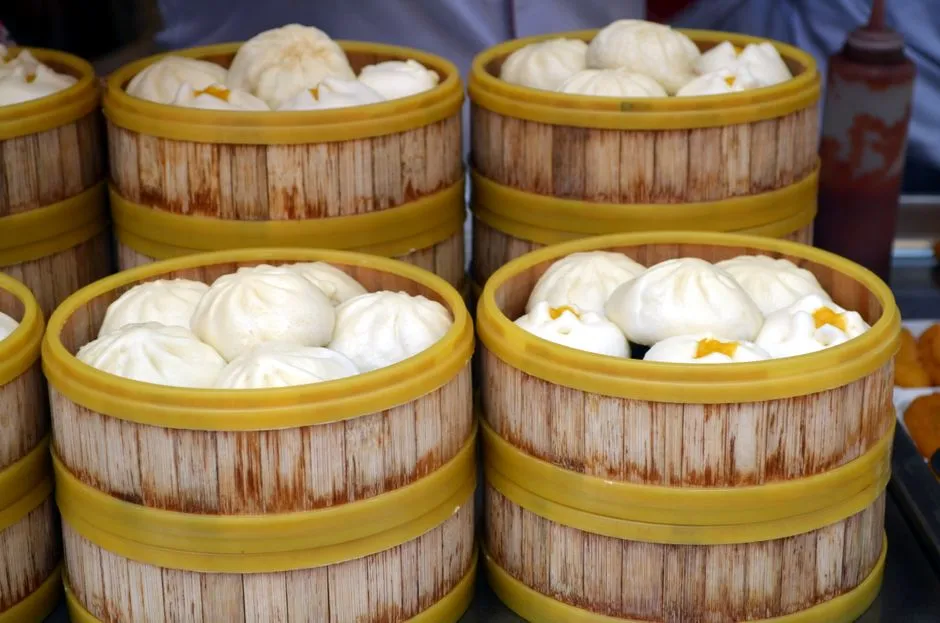
Can you freeze momos before cooking them?
Yes. Freeze uncooked momos in one spaced layer until firm, then transfer them to a labelled freezer container or bag. Steam them straight from frozen over already-boiling water rather than thawing them on the counter. Allow more time than for fresh momos, but use a thermometer—not the clock or wrapper colour—to confirm a meat filling is safe.
Start with fresh, safely handled ingredients. Freezing cannot rescue filling left warm too long or eliminate harmful germs. Follow FoodSafety.gov's clean, separate, cook and chill guidance throughout.
Freeze the momos on a tray first
Prepare a rimmed tray that fits flat in your freezer. Line it with parchment or a clean reusable freezer-safe liner. Do not use loose paper that can tear and remain stuck to the dough.
Arrange the newly folded momos in one layer with space between them. The seams should be fully closed, the filling should not touch the outer dough, and no dumpling should lean against another. A crowded pile freezes into one block; separating it later tears the wrappers.
For raw-meat momos, keep most of the filling refrigerated and assemble one small group at a time. Wash hands with soap and water after handling the raw filling. Wash bowls, boards, knives and utensils that touched it with hot, soapy water before they contact cooked food or ready-to-eat sauce. Do not wash raw poultry or meat, because splashing can spread contamination.
Move each filled tray into the freezer promptly. FoodSafety.gov says perishable food should not remain out for more than two hours, or more than one hour when exposed to temperatures above 90°F (32°C). Those are outer safety limits, not targets for a leisurely folding session.
Pack only after the shells are firm
Keep the tray level until the momos lift without bending or sticking. Freezer load, tray material, dumpling size and filling temperature determine how long this takes.
Quickly transfer firm momos to a freezer-safe container or heavy freezer bag. Remove excess air without crushing pleats; close securely and keep sharp edges away from wrappers.
Label the package with:
- the date frozen;
- the filling type;
- whether the filling is raw or already cooked;
- the number of momos;
- any allergen information the household needs.
Keep chicken, other meat, paneer and vegetable momos separately labelled: their safe endpoints and dietary requirements differ.
How long can frozen momos be stored?
Keep the freezer at 0°F (-18°C) or below. FoodSafety.gov says food held continuously at that temperature can be kept indefinitely from a safety standpoint; its recommended freezer times are about quality. Its chart gives 3 to 4 months for ground meats and ground poultry.
The chart does not name homemade momos. Use three to four months as an outside quality guide for raw ground-meat batches; wrappers may deteriorate sooner. A shorter household target is reasonable. Date bags and use the oldest sound batch first.
Dry, discoloured or leathery patches suggest freezer burn. University of Kentucky Extension explains that freezer burn results from air exposure and affects quality rather than safety. A torn package, major ice buildup or damaged wrapper still justifies a closer check. If the freezer lost power or the storage history is uncertain, follow current government outage guidance rather than relying on smell.
Steam momos directly from frozen
Do not thaw the tray on the counter. Thawing makes the wrapper surface damp and soft while the centre remains cold; the momos can stick to each other or the liner before cooking begins. Kentucky Extension confirms that raw or cooked meat and poultry can be cooked from frozen, allowing extra time.
Use this sequence:
- Bring the steamer water to a full boil before loading the tray.
- Lightly grease the perforated tray or use perforated parchment or cabbage leaves.
- Arrange frozen momos in one layer with space between them. Do not pack the vents closed.
- Cover and keep the water boiling steadily without letting the pot boil dry.
- Begin checking after the fresh recipe's usual window plus additional time for the frozen centre.
- Probe a centre momo in the thickest part of its filling, then check another if size or placement varies.
Our Nepali momo recipe gives 10–12 minutes for fresh chicken momos and adds 3–4 minutes for frozen momos. That makes 13–16 minutes a planning window for that recipe and size, not a universal endpoint. A larger momo, thicker wrapper, crowded tier or weak steam supply can take longer.
FoodSafety.gov's temperature chart specifies 165°F (74°C) for poultry filling. Ground beef, pork, lamb and veal require 160°F (71°C). Insert a clean instant-read thermometer through the side so its tip reaches the middle of the filling. If it reads low, close the lid, continue steaming and test again with a cleaned probe.
Vegetable or paneer momos have no raw-meat endpoint, but their wrappers still need to be fully cooked and their centres hot. Keep meat and vegetarian batches separate, and use clean utensils for the cooked dumplings.
Prevent sticking, tearing and soggy skins
Protect the wrappers during cooking:
- Do not thaw first. Condensation and softening make the raw wrapper harder to lift intact.
- Start over boiling water. Loading a cold steamer leaves the dough sitting in warm moisture.
- Leave space. Touching wrappers can fuse as they soften.
- Keep the lid closed. Repeated opening releases steam and extends the cook.
- Control condensation. Lift the lid away from your face and tip it so collected water does not pour onto the momos.
- Lift with a thin spatula. Pulling by the pleated top can open the seam.
Do not tie a loose cloth beneath a lid where it can hang near a flame or heating element. Use the steamer manufacturer's safe condensation method.
Refill the steamer safely
Check the water level before each batch. Never reach over active steam, and never let the pan boil dry. If water needs topping up, stop the heat if the setup requires it, move your face and hands away from the steam path, and add hot water carefully according to the steamer instructions. Keep handles turned away from the edge of the stove.
Remove the lid so steam escapes away from you. Set it on a heat-safe surface. Keep children and pets outside the cooking area, and wipe floor spills immediately.
Frequently asked questions
Should momos be cooked before freezing?
This workflow freezes them uncooked so they can go from freezer to steamer. Cooked momos can also be frozen, but reheating is a different process and leftovers must reach 165°F (74°C). Do not mix cooked and raw momos in one unmarked package.
How long do frozen momos take to steam?
For the site's 30-piece chicken recipe, use 13–16 minutes as a planning window: the 10–12-minute fresh range plus 3–4 minutes. Confirm the centre reaches 165°F (74°C). Size, wrapper thickness, steamer load and steam strength can extend the time.
Can frozen momos be thawed before steaming?
They do not need to be thawed. Steam them from frozen. Counter thawing is not safe, and a thawed wrapper becomes damp and easier to stick or tear. If a recipe specifically calls for thawing, use a refrigerator and follow that tested recipe's instructions.